
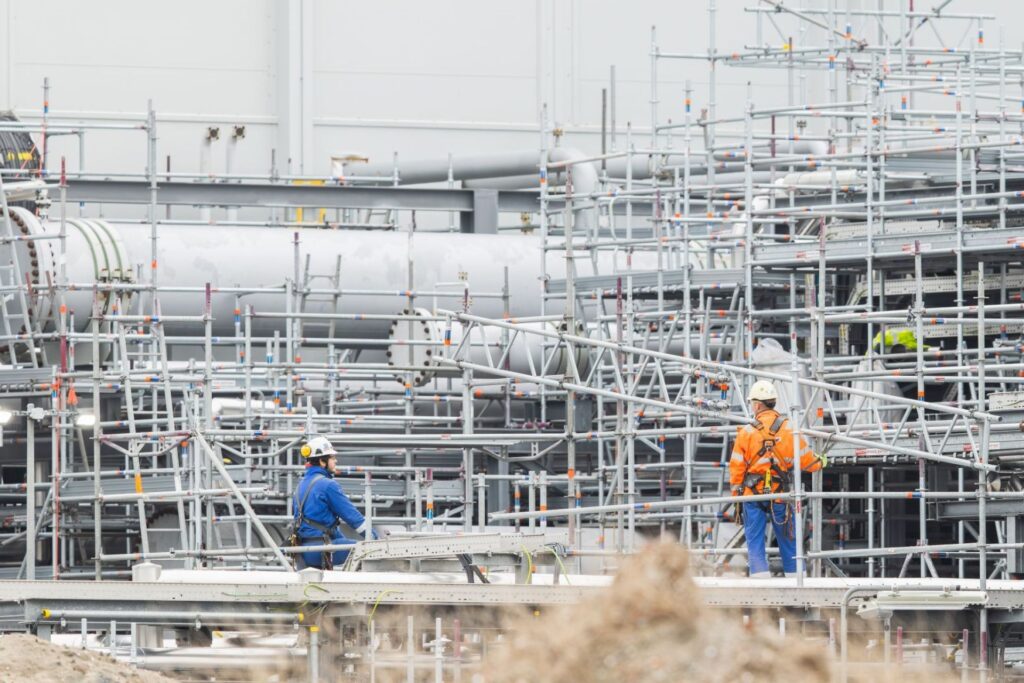
The First 32 km of the Hydrogen Highway: An Analysis of Operations in Rotterdam (January 2026)
1. Strategic Context: Why Rotterdam?
The Delta Rhine Corridor (DRC) is a flagship project of the European Hydrogen Backbone, designed to connect the Port of Rotterdam with key industrial clusters in the Netherlands and Germany. Its primary goal is the decarbonization of heavy industries (refineries, chemicals, steel) by delivering green hydrogen and enabling Carbon Capture and Storage (CCS). According to Gasunie, the network operator, the project is vital for achieving EU targets of a 55% emission reduction by 2030.
Technical Specifications:
- Carriers: Hydrogen ($H_2$), $CO_2$ (for sequestration), Ammonia/LPG (in later phases).
- Infrastructure: Utilizing modernized natural gas pipelines (retrofitting) alongside the construction of new sections.
- Cross-border Connections: Planned integration with the German GET H2 system and the Belgian Hyoffwind by 2032.
2. Operation „First Fill”: 32 km, 32 Tons of Hydrogen — Challenges and Solutions
2.1. Transport Logistics: A Tanker Convoy from Germany
- Problem: * Lack of Local Production: Hydrogen was produced by Plug Power in Northern Germany because the electrolyzers in Rotterdam were not yet operational.
- Transport: 32 tons of hydrogen were transported by dozens of tankers over several days—an operation requiring precise coordination due to strict timing and safety requirements (hydrogen under 300–500 bar pressure).
- Temporary Terminal: A temporary injection point was established at the Maasvlakte area, equipped with pressure, temperature, and leak monitoring systems.
- Solutions:
- Partnership with Plug Power: Gasunie collaborated with the hydrogen supplier to optimize routes and ensure continuity. GPS tracking was used for real-time monitoring of the tankers.
- Emergency Procedures: Scenarios were developed for potential delays (weather, customs), preventing downtime.
- Scalability: The operation proved that road transport of hydrogen serves as an effective „bridging technology” before cross-border pipelines are completed.
Source: „The filling operations were performed in partnership with Plug Power Inc. […] dozens of trailers carrying containers full of green hydrogen had to make their way from northern Germany to the Maasvlakte industrial area near Rotterdam.”
2.2. Safety and Integration with Existing Infrastructure
- Problem:
- Infrastructure Density: The Port of Rotterdam is one of the most complex areas in terms of underground networks (fuel pipelines, high-voltage cables, water channels).
- Hydrogen Embrittlement: Risk of structural degradation in steel pipelines, particularly those repurposed from natural gas.
- Leak Sealing: Zero tolerance for leaks in an urbanized/industrial area.
- Solutions:
- 3D Modeling (BIM): Advanced software was used for route planning and optimizing Horizontal Directional Drilling (HDD) to minimize interference with existing networks.
- Fiber-optic Sensors: A real-time monitoring system was installed to detect microscopic leaks and material stress. These sensors are resistant to electromagnetic interference.
- Durability Tests: Prior to filling, pressure tests (up to 100 bar) and ultrasonic weld inspections were conducted. Protective polymer coatings were applied to old pipes to prevent hydrogen corrosion.
Source: „In the development of the network, existing pipelines will be used for the most part… At locations where the existing network is not suitable or is not available in time, new pipelines will be laid.”
2.3. Planning Procedures and Social Acceptance
- Problem:
- Delays: The original schedule targeted full operability by 2030, but integrated planning procedures (Hydrogen, $CO_2$, electricity) pushed the deadline to 2033.
- Social Consultation: Necessity of obtaining approval from local communities, landowners, and environmental organizations.
- Solutions:
- Stakeholder Dialog: Gasunie conducted over 60 consultations with local entities, including the Port of Rotterdam, refineries, and resident associations.
- Transparency: Environmental Impact Assessment (EIA) reports were published, and webinars were held to explain project benefits (emissions reduction, job creation).
- Flexible Schedule: Extending deadlines allowed for better alignment with procedural realities, reducing the risk of project suspension.
Source: „The government expects to formally decide on the revised rollout plan for our national hydrogen network in 2026, along with a decision on applying the principle of intertemporal cost allocation with an amortisation fund.”
3. Costs and Financing: Project CAPEX/OPEX
| Category | Estimated Costs (2026) | Source |
| Construction of 32 km section | ~€120–150 million (CAPEX) | ENTSOG, Gasunie (2025) |
| Pipeline Modernization | ~€30–50 million (retrofitting) | Hydrogen Europe (2024) |
| Monitoring System | ~€10 million (sensors/software) | Gasunie (2026) |
| Hydrogen Transport (tankers) | ~€2–3 million („First Fill” operation) | Plug Power (2026) |
| Total CAPEX (Phase I) | ~€200–250 million |
Financing:
- EU Grants: Support from the Innovation Fund (IFEO) and the Connecting Europe Facility (CEF).
- Public-Private Partnership: Collaboration with Shell, BP, Air Liquide, and local governments under the H2Global initiative to lower costs through price guarantees.
4. Implications for Poland: Lessons from Rotterdam
- Prioritize Industrial Hubs: The Dutch started with their strongest cluster (Rotterdam) rather than long national pipelines. In Poland, Pomerania (ports) and Silesia (industry) should be the primary investment targets.
- International Partnerships: The Plug Power (USA) + Gasunie (NL) model shows the importance of collaborating with global technology providers.
- Logistical Flexibility: Temporary solutions (tankers) are essential during the transition phase before pipelines are built.
- Procedural Transparency: Delays in the Netherlands stemmed from complex environmental procedures. Poland must prepare for similar challenges through early consultations with environmental authorities (GDOŚ) and local governments.
5. Summary: What’s Next for the Delta Rhine Corridor?
- 2026: Full operability of the Rotterdam cluster (32 km).
- 2031–2032: Connection with Germany (GET H2) and Belgium.
- 2033: Full network operability (1,200 km).
- Long-term Goal: Reducing $CO_2$ emissions by 10 million tons/year in the Dutch and German industrial sectors.
SEO Summary for wodorowa.eu:
This analysis of the Rotterdam hydrogen highway demonstrates that success depends on engineering precision and strategic partnerships. While corporations like BP or Shell provide the capital, the „living tissue” of the project is managed by specialized infrastructure operators and government backing.
Sources: Gasunie (2026), Hydrogen Central (2026), Hynetwork (2026).