
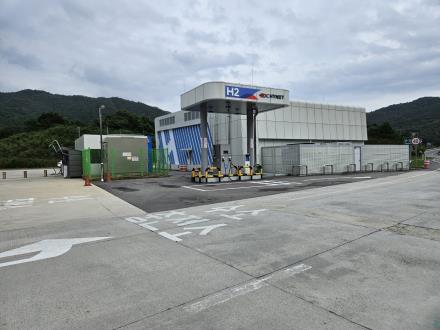
The Korean Rescue Maneuver: 150 Billion Won to Overcome the Hydrogen Infrastructure „Death Valley”
While Europe continues to debate the final shape of the AFIR network, South Korea – the world leader in the number of hydrogen refueling stations – is launching a counter-offensive. The Ministry of Environment (MCEE) has announced the creation of a fund worth 149.4 billion won (approx. 103.2 million USD). Its goal is not only to build new points but, above all, to rescue the profitability of existing infrastructure. This is a signal to the world: the era of car purchase subsidies is ending; the era of fighting for operational efficiency is beginning.
Strategic Pivot: From Subsidies to Capital Investments
In January 2026, the South Korean Ministry of Environment finalized the guidelines for the „Electric and Hydrogen Mobility Infrastructure Fund.” This is a breakthrough project because it changes the financing model from simple grants to a public-private joint investment mechanism.
- The state provides 74.7 billion won as a so-called „parent fund.”
- Private capital is expected to double this amount, creating sub-funds with a total value of nearly 150 billion won.
- This move aims to attract players who were previously deterred by the risks associated with the long payback period for hydrogen investments.
Why Does Korea Need to „Save” Hydrogen?
South Korea boasts one of the densest hydrogen station networks in the world (over 240 facilities as of early 2025). However, the system has faced serious challenges:
- Low Profitability: Operating costs (compression, cooling, maintenance) exceeded fuel margin profits, especially with a slower-than-expected adoption rate of passenger cars.
- Supply Crises: In 2024, the country experienced local hydrogen shortages, undermining user confidence among Nexo drivers and bus operators.
- High Energy Costs: Rising electricity prices in Korea directly hit on-site hydrogen generation stations and those using high-capacity compressors.
The 4 Pillars of the Fund: Where Will the Money Go?
The Ministry has identified bottlenecks blocking market development. The fund will focus on:
- Modernizing „Aging” Stations: Stations built 5–7 years ago require component replacement for higher efficiency and safety.
- Hydrogen-RES Hubs: Investments in facilities where hydrogen is produced from surplus solar or wind energy, radically lowering the Levelized Cost of Hydrogen (LCOH) per kilogram.
- Battery Swapping Systems (BSS): Support for battery EVs, specifically for courier and light transport services.
- Vehicle-to-Grid (V2G): Developing bidirectional chargers that allow vehicles to stabilize the Korean power grid.
Priority: Heavy Duty Transport and Logistics
Analysis of the 2025 and 2026 budgets shows a clear hierarchy: Hydrogen is for professionals. While the budget for passenger car subsidies was slightly adjusted (-20%), funds for hydrogen buses and trucks are growing exponentially.
Under the „Hydrogen Vehicle Distribution Project,” Korea is focusing on:
- Deploying 2,000 hydrogen buses in 2025 alone.
- Building high-capacity stations capable of servicing truck fleets in logistics centers.
- Goal for 2030: 300,000 Fuel Cell Electric Vehicles (FCEVs) on the road and 660 refueling stations.
A Lesson for Global Markets
The Korean model is an invaluable lesson for emerging markets. The key takeaway: Building the station is only 30% of the success. Without mechanisms supporting operational profitability in the early years and a strong emphasis on heavy transport (buses, garbage trucks, lorries), hydrogen infrastructure risks becoming a „technological monument” rather than the lifeblood of the economy.
Table: Strategy Comparison 2024 vs. 2026 (South Korea)
| Feature | 2024 (Old Model) | 2026 (New Model) |
| Main Goal | Quantity of stations & passenger cars | Profitability & heavy transport |
| Source of Funding | Direct government subsidies | Public-private fund (PPP) |
| Key Technology | Compressed gaseous hydrogen | Liquid hydrogen (LH2) & RES hubs |
| EV Approach | Separate from H2 | Integration (combined charging hubs) |
Technical Deep Dive: The Shift to Liquid Hydrogen (LH2)
South Korea is aggressively transitioning from compressed hydrogen (350/700 bar) to Liquid Hydrogen (LH2). This technology offers:
- Faster Refueling: LH2 allows trucks to be refueled in 10 minutes (vs. 30+ minutes for gas).
- Higher Energy Density: Crucial for servicing heavy fleets in high-traffic logistics hubs.
- Infrastructure: The fund prioritizes LH2 terminals, aligning with industrial giants like SK E&S and Hyundai’s development of the Xcient truck series.
SWOT Analysis: The Korean Hydrogen Infrastructure Fund
| Opportunities | Risks |
| Market Professionalization: Shift to heavy transport ensures steady fuel off-take and higher station utilization. | Technological Delays: LH2 is demanding; potential failures could stall the development of high-capacity hubs. |
| Economies of Scale: 21,200 hydrogen buses by 2030 will create demand that lowers the hydrogen price at the pump. | Competition from BEVs: Rapid development of ultra-fast chargers (350kW+) for electric trucks may challenge H2 economics on short routes. |
| Technology Export: Companies like MS Eng and Kwangshin may gain a technical edge for export to Europe and the US. | Electricity Price Stability: Profitability of on-site H2 production depends heavily on energy costs. |
Fact-Check: While 103 million USD is often presented as a massive figure, in the context of Korea’s energy needs, it serves as seed capital. Its true value lies in acting as a catalyst to de-risk investments for private funds, transforming hydrogen infrastructure from a subsidized experiment into a viable business.