
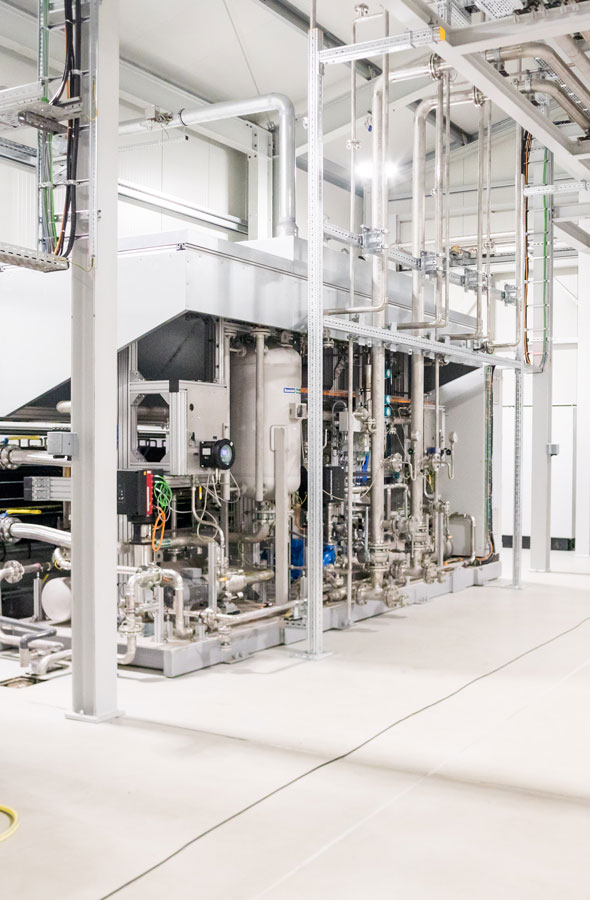
The Green Giant of Lower Saxony: A Complete Transformation Study of Salzgitter AG
Introduction: Industry on the Verge of Revolution
Steelmaking is the backbone of the European economy, but it is also one of the largest emitters of carbon dioxide. In 2026, the conversation has shifted from if we should abandon coal to how fast it can be done without economic collapse. The German conglomerate Salzgitter AG, rather than waiting for top-down regulations, created the SALCOS® (Salzgitter Low CO₂ Steelmaking) project. This undertaking is comparable in scale to a moon landing for the metallurgical world, representing a radical departure from 200 years of Blast Furnace (BF) tradition in favor of the Direct Reduced Iron (DRI) process using green hydrogen.
As of January 2026, SALCOS® is no longer just a vision on paper; it is a massive construction site navigating the brutal realities of economics, infrastructure gaps, and geopolitical shifts in the raw materials market.
1. Foundations and Milestones: The Path to 2026
The transformation of Salzgitter AG is a multi-stage process. The chosen strategy, Carbon Direct Avoidance (CDA), differs fundamentally from Carbon Capture and Storage (CCS). CDA ensures that $CO_2$ is never created in the first place.
Securing Financing – The State as a Partner
In 2023, Salzgitter AG was awarded a grant of approximately €1 billion, funded by the German federal government and the state of Lower Saxony. This was a clear market signal: the German government is betting on hydrogen. The total cost of Phase I alone is €2.5 billion. Approved by the European Commission under state aid mechanisms, this investment was crucial for maintaining liquidity amidst high interest rates.
Construction Progress: January 2026
By early 2026, construction of the core units—the Direct Reduction Plant (DRI) and the Electric Arc Furnace (EAF)—reached 70% completion. The first commercial batch of steel produced under the new system is expected to leave the plant in the first half of 2027. Thousands of engineers are currently on-site, with the landscape dominated by cranes assembling the massive DRI reactor.
2. Anatomy of Innovation: Technological and Process Advantages
The success of SALCOS® rests on integrating technologies that have never cooperated at this scale.
The DRI-EAF Process: New Steel Chemistry
In the traditional BF-BOF route, coking coal acts as a reducing agent for iron ore, emitting vast amounts of $CO_2$. SALCOS® replaces coal with hydrogen ($H_2$):
$$Fe_2O_3 + 3H_2 \rightarrow 2Fe + 3H_2O$$
Instead of black smoke, the byproduct is pure water vapor. Through the BeWiSer project, this vapor is recovered, condensed, and redirected to the electrolysis units, creating a near-closed water loop.
High-Temperature Electrolysis (SOEC) – The Ace in the Hole
Salzgitter gains its greatest competitive edge here. Unlike standard Alkaline or PEM electrolyzers, Salzgitter, in partnership with Sunfire and Tenova, deployed Solid Oxide Electrolysis Cells (SOEC). By utilizing waste heat from the steelmaking process (approx. 850°C), this system requires significantly less electricity to split water molecules. With an electrical efficiency of 84% LHV (as per Fraunhofer IKTS), on-site hydrogen production remains viable even at higher electricity prices.
3. Energy Infrastructure: Securing the Supply
Green steel requires massive amounts of clean energy. Salzgitter cannot rely solely on the spot market.
- Solar and Wind: In early January 2026, Iberdrola commissioned a 65 MWp solar park in Saxony-Anhalt dedicated exclusively to SALCOS®. A 15-year PPA guarantees roughly 60 GWh annually. This complements the existing 30 MW on-site wind farm.
- 100 MW Electrolyzer: Since February 2025, construction has been underway for a 100 MW electrolysis plant supplied by ANDRITZ, expected to produce 9,000 tons of green hydrogen annually to ensure early-phase independence.
4. Challenges and the „Reality Check” of 2025
Despite engineering successes, 2025 brought a painful verification of business plans.
Timeline Revision: Phases II and III
In November 2025, CEO Gunnar Groebler announced that the original goal of full transformation by 2030 was unrealistic. Phases II and III have been pushed back by at least three years (to 2033 and beyond) due to:
- Infrastructure Gaps: The European Hydrogen Backbone is developing slower than expected, lacking physical pipeline connections to ports like Wilhelmshaven.
- Energy Costs: German electricity prices remain among the highest in Europe, threatening profitability during low-wind periods.
- The Scrap Crisis: EAFs require high-grade scrap. China’s own green transition led to a block on secondary raw material exports, causing a drastic price surge in Europe.
5. Competitive Advantages vs. Strategic Risks (2026 Analysis)
| Area | Advantage (Opportunities) | Risk (Threats) |
| Location | Proximity to North German wind clusters. | Lack of cheap hydropower (Sweden/Stegra advantage). |
| Technology | Unique SOEC efficiency (84%) and water recovery. | High OPEX for maintaining new, complex installations. |
| Markets | „SALCOS Green Steel” branding and OEM contracts. | Cheap steel imports from countries bypassing CBAM. |
| Infrastructure | On-site 100 MW electrolyzer and dedicated PV. | Delays in the National Hydrogen Network construction. |
6. Deep Technical Dive: The DRI Process Heart
Salzgitter opted for the Energiron ZR® (Zero Reformer) technology developed by Tenova and Danieli.
- Direct Hydrogen Injection: Unlike Midrex systems, Energiron ZR® injects hydrogen directly into the reactor shaft, minimizing energy loss.
- Fuel Flexibility: The plant can run on any mix of hydrogen and natural gas (0% to 100% $H_2$), allowing for a smooth transition as green fuel availability grows.
- Process Pressure: Operating at up to 7 bar, these reactors offer higher unit productivity and lower energy consumption for compressors.
7. Regulatory Context: CBAM and EU ETS
The Carbon Border Adjustment Mechanism (CBAM), entering full implementation in 2026, serves as a shield for Salzgitter. Without it, steel produced with expensive hydrogen could not compete with cheap carbon-heavy imports. Simultaneously, the phasing out of Free Emission Allowances under EU ETS by 2034 means traditional mills will face costs of €150-200 per ton of steel just in $CO_2$ fees—costs SALCOS® avoids by 95%.
8. Facts and Trivia: Beyond the Corporate Reports
- The 100-Meter Tower: The heart of the DRI plant is a shaft reactor nearly 100 meters high (equivalent to a 30-story skyscraper), requiring the world’s largest crawler cranes for assembly.
- 380,000 Volts: Siemens Energy built a 380 kV substation to power the EAFs. At peak times, the energy flow could power the entire city of Hanover.
- Generational Change: Over 1,000 employees are undergoing total retraining, moving from manual blast furnace operations to high-tech digital control panels for electrolysis.
- Microbial Decarbonization: Through the Carbon2Chem project, Salzgitter is exploring using process gases to feed bacteria that convert carbon residues into chemicals like methanol, effectively making the steel mill a part-time biorefinery.
Summary: Will it Pay Off?
Academic analysis (Mayer et al., 2023) confirms SALCOS® is the most energy-efficient project in the industry. However, without „green quotas” in the automotive and construction sectors, green steel may struggle to compete on price until the mid-2030s. Salzgitter AG has bet everything on one card; the success of this project will decide if Germany remains the industrial heart of Europe.
Analysis by: Jan Frejowski, wodorowa.eu
Sources: Salzgitter AG Annual Report 2024/25, Fraunhofer IKTS, Iberdrola Press, European Commission State Aid Case SA.102347.