
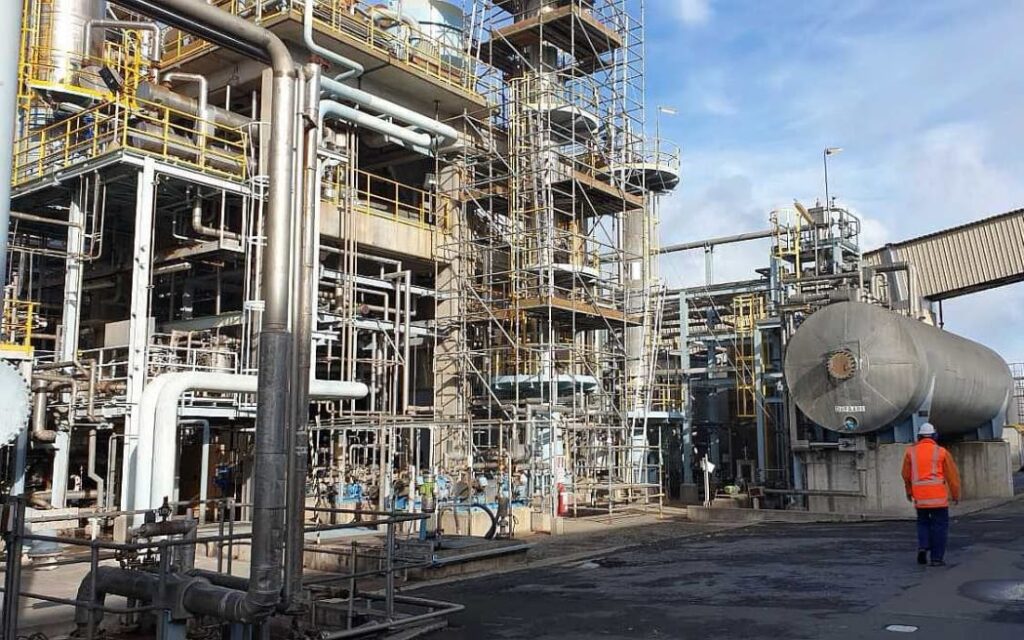
Kapuni: Capital Patience
How New Zealand Finalized Its Largest Green Hydrogen Project After a 5-Year Wait
Taranaki, New Zealand. In a world dominated by headlines of gigawatt-scale projects that rarely leave the 3D rendering phase, New Zealand’s Hiringa Energy has just sent a signal of a completely different nature. Five years after securing initial government funding, the Kapuni Green Hydrogen project has officially passed the Final Investment Decision (FID) and entered the construction phase in February 2026.
This isn’t just news about a 5 MW electrolyzer. It is a case study on surviving the hydrogen investment „Death Valley,” neutralizing legal opposition, and why 112.3 million NZD (approx. 67.2 million USD) spent today serves as an insurance policy for an agriculture-based economy.
1. Five Years in Purgatory: A Lesson in „Red Tape”
In 2020, the Kapuni project received 19.9 million NZD from the Provincial Growth Fund. The market expected rapid success, but reality proved to be a brutal lesson in capital and legal discipline. Instead of construction, Tim Hannig’s team spent 1,800 days in courtrooms.
The project became a testing ground for New Zealand’s Resource Management Act (RMA). Opposition from the local iwi Te Korowai o Ngāruahine Trust and Greenpeace, based on cultural and environmental arguments, stalled the investment for years. It took High Court and Court of Appeal rulings to clear the legal barriers. Regional Development Minister Shane Jones commented pointedly: „We have waited over five years… This project was delayed by years of bureaucracy and appeals. Such stagnation should not happen.”
2. System Architecture: 5 MW of Engineering Realism
Kapuni does not pretend to be a global hub. It is a precisely calibrated, behind-the-meter industrial unit.
- Technology: 5 MW electrolyzer – currently the largest in the country.
- Energy: Powered by four giant wind turbines (206 meters tall). These act as the „lungs” of the project, delivering renewable energy directly to the process.
- Integration: The hydrogen isn’t searching for a buyer on the open market – it is piped directly to the neighboring Ballance Agri-Nutrients plant.
In an era of „hydrogen gigantomania,” Hiringa focused on modularity and off-take certainty.
3. The Nexus: Hydrogen and Fertilizer as a Survival Strategy
The most critical element is the symbiosis with the fertilizer industry. Nitrogen fertilizers, traditionally produced from natural gas via Steam Methane Reforming (SMR), are a pillar of New Zealand’s GDP but also its largest emission burden. Green hydrogen in Kapuni acts as a price hedge:
- Decarbonization at Source: Directly replacing fossil-based hydrogen with green molecules in ammonia production.
- Export Advantage: Agricultural products with a „green passport” will more easily navigate trade barriers like the EU’s CBAM (Carbon Border Adjustment Mechanism).
4. Finance: Where is the Profitability Threshold?
The cost of 112.3 million NZD for 5 MW (approx. 22 million NZD/MW) may seem astronomical compared to European prices. However, this includes full supporting infrastructure: turbines, storage, and distribution systems. FID was reached only when technological risk was fully balanced by off-take guarantees and partner stability, including Todd Energy and Maori capital (PKW).
Executive Quotes: Voices of the Partners
Catherine Clennett, Co-founder and Chair of Hiringa Energy:
„Reaching Financial Close is a milestone for the Kapuni Project and for the entire energy sector in Aotearoa (New Zealand). Kapuni is more than just a wind farm – it is a collaborative, integrated energy project that demonstrates how strong partnerships between industry, Māori communities, and the government can drive innovation, create economic opportunities, and lead a successful energy transition.”
Kelvin Wickham, CEO of Ballance Agri-Nutrients:
„Our sector depends on predictability, and investing in renewable energy helps protect it in the long term. This project is a major step forward. It allows us to pursue nutrient (fertilizer) production powered by renewable energy, supporting farming businesses for future generations.”
Evan Davies, CEO of Todd Corporation:
„Todd recognizes wind and green hydrogen as vital emerging opportunities for New Zealand’s energy future. Partnerships like the Kapuni Project represent what will be required in the future to deploy new technologies and business models that contribute to regional development.”
Dion Tuuta, Chair of Parininihi ki Waitōtara (PKW):
„This project reflects our responsibility as kaitiaki (guardians) to invest in opportunities that protect our environment while creating lasting benefits for our uri (descendants).”
Lessons for the Global Market: 5 Key Takeaways
- Co-location is mandatory: Don’t build where the wind blows; build where the factory fence stands. H2 transport costs can kill any business plan.
- The War on „Red Tape”: A „green” status does not shield a project from environmental protests. The budget for legal counsel must be as robust as the budget for technology.
- Discipline of Silence: Hiringa won because, instead of PR promises, they spent 5 years fighting for contracts and court rulings.
- Off-take is King: Green hydrogen needs a guaranteed customer (like the fertilizer industry) to reach FID.
- Modular Realism: Small-scale (5 MW) operational projects are more valuable for the market than 1 GW projects that remain on paper.