
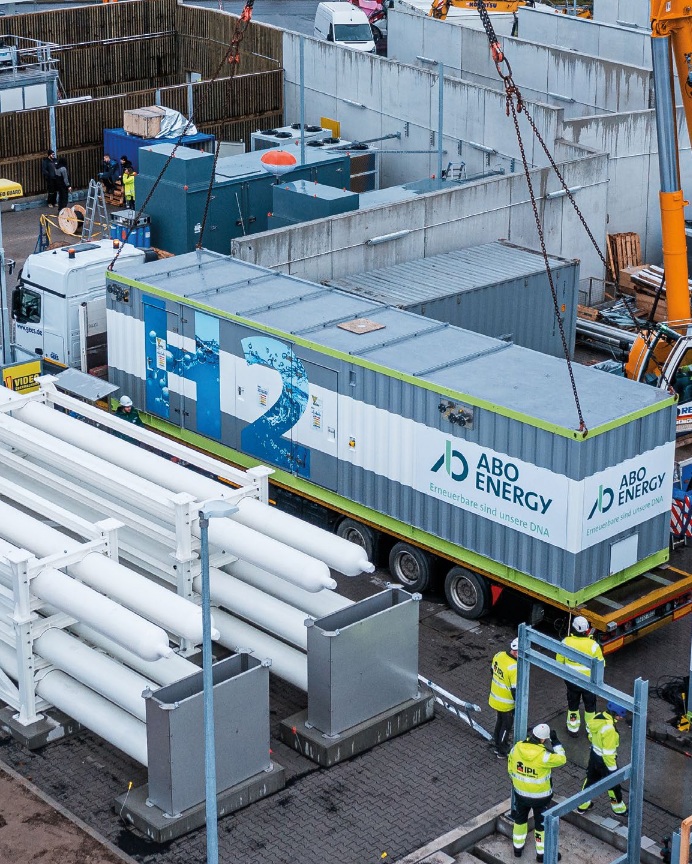
Gigawatt Scale of the North: An Analysis of ABO Energy’s Hydrogen Projects in Oulu (Pyyryväinen) and Nivala (Kurunpuhto)
While most European hydrogen projects remain in the conceptual or pilot phase (under 20 MW), the Finnish projects in Oulu and Nivala, developed by ABO Energy Suomi, are pushing the boundaries of industrial feasibility. With a planned total capacity reaching toward the gigawatt scale, these sites are becoming critical hubs on the European energy transformation map.
1. Project Architecture: From Electrolysis to e-Fuels
At the heart of the investment in the Pyyryväinen industrial zone (near the Port of Oulu) lies a massive electrolysis plant. This is not merely a gas production facility; it is an integrated chemical and energy complex.
- Installed Capacity: Target of 600 MW (developed in phases of 200–300 MW).
- Production Volume: Estimated output of up to 100,000 tons of green hydrogen per year at full capacity.
- Technology: The project maintains flexibility between PEM and Alkaline technologies to best react to the intermittency of wind power.
2. Sector Coupling and Circular Economy
What distinguishes the Oulu project is the near 100% utilization of electrolysis by-products. Hydrogen is only the beginning.
Waste Heat Recovery (Power-to-Heat)
ABO Energy has signed an MOU with Oulun Energia to integrate the plant into the municipal district heating network.
- Efficiency: Total system efficiency rises from 60-65% (hydrogen only) to nearly 90% (hydrogen + heat).
- Scale: Waste heat from 600 MW of electrolysis can cover a significant portion of the heating needs for Finland’s third-largest city.
Production of e-Fuels (e-Methanol and eSAF)
To facilitate long-distance transport, hydrogen will be synthesized with biogenic $CO_2$ captured from local industrial plants:
- e-Methanol: Essential for the decarbonization of the maritime sector.
- eSAF (Sustainable Aviation Fuel): Synthetic aviation fuel designed to meet the rising demand mandated by the EU’s ReFuelEU Aviation directive.
3. Strategic Location and Logistics
Oulu’s selection was driven by infrastructure that many Central European locations lack:
| Feature | Strategic Importance |
| Fingrid Grid Access | Proximity to strong connection points for North Finnish wind power. |
| Port Proximity | Enables the export of e-fuels to hubs in Rotterdam, Hamburg, or Gdańsk. |
| Hydrogen Backbone | Located on the planned Nordic-Baltic Hydrogen Backbone, connecting Finland to Germany via Poland. |
4. The Nivala (Kurunpuhto) Model: Behind-the-Meter Integration
If Oulu represents massive scale, the Kurunpuhto project in Nivala (200 MW) is the technological benchmark for Behind-the-Meter (BTM) integration—the direct connection of renewable sources to hydrogen production.
Key Parameters of the Nivala Project:
- Model: Direct physical connection to a dedicated portfolio of 9 wind farms (totaling approx. 400 MW).
- Economic Advantage: By bypassing the public grid (Direct Line), the project avoids significant transmission tariffs, reducing the LCOH (Levelized Cost of Hydrogen) by 15–25%.
- Synergy with Biogas: Green hydrogen will be combined with biogenic $CO_2$ from a neighboring large-scale biogas plant (CIP project) to produce e-methane.
5. Economic Analysis: CAPEX, OPEX, and LCOH
Finland currently offers some of the most competitive conditions for hydrogen production in Europe.
Cost Comparison (Estimated for 2026):
| Project | Est. CAPEX | Est. LCOH (EUR/kg) | Business Model |
| Oulu (ABO) | €1.8–2.2 Billion | 3.5–4.5 | Urban integration + e-Fuels |
| Nivala (ABO) | ~€1 Billion | 3.0–3.8 | BTM + Biogas Synergy |
| EU Average | Varies | 4.5–6.0 | Grid-connected / Higher Tariffs |
Why Finland is winning:
- Low Electricity Costs: High share of wind and nuclear power.
- Heat Revenue: Selling waste heat creates an additional revenue stream (Power-to-Heat).
- Water Access: Abundant clean water reduces pre-treatment costs compared to Southern Europe.
6. Challenges and Market Realities (2024-2025)
Despite the technical progress, ABO Energy has faced structural barriers:
- Grid Bottlenecks: Northern Finland faces transmission limits during peak wind production periods.
- Negative Energy Prices: Periods of negative pricing in 2024/25 have paradoxically complicated long-term PPA (Power Purchase Agreement) negotiations.
- Financial Corrections: In late 2025, ABO Energy adjusted its portfolio valuation due to high interest rates and the „Off-take gap”—the search for industrial buyers willing to pay the „green premium” amidst natural gas price uncertainty.
7. Strategic Outlook and Conclusions
The ABO Energy projects in Oulu and Nivala provide four key lessons for the wodorowa.eu community:
- Scale Matters: 600 MW is 10 times larger than typical European pilot projects, enabling true economies of scale.
- Integration is Key: Full utilization of $CO_2$ and waste heat is required for profitability.
- The BTM Advantage: Direct-line wind integration is the most effective way to lower LCOH.
- Timing: While initial operation for Oulu has been phased toward 2034–2036, this aligns with the completion of the European Hydrogen Backbone, ensuring a mature market for export.
Analysis by: Jan Frejowski, wodorowa.eu
Sources: ABO Energy KGaA Annual Reports (2024/25), Fingrid Main Grid Plan, Both2nia Hydrogen Valley Registry.